
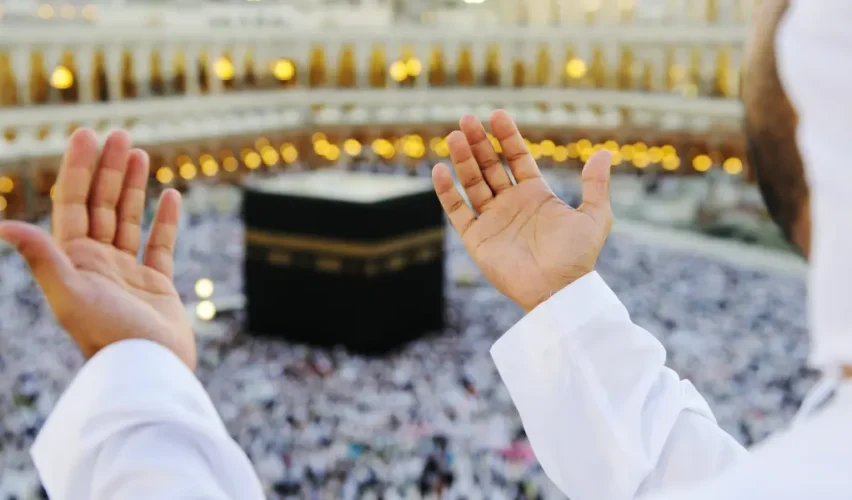
Umrah (العمرة) is a Sunnah and an auspicious spiritual journey. It offers the opportunity to visit the Holy Kaaba and submit to Allah without waiting for Hajj. Unlike Hajj, Muslims can perform Umrah throughout the year. This is why Umrah is considered more accessible for Muslims in Saudi Arabia and across the world.
Pilgrims must understand the rules, steps, and requirements of Umrah to perform it correctly. Pro Tip: do a thorough research on the rituals of Umrah before leaving. Yes, you’ll get guidance during Umrah too. But it is best to educate yourself beforehand as well. Plus, knowing about this spiritual journey will lead to a more immersive experience.
Here is your complete guide to performing Umrah and everything else you should know about it.
Key Takeaway!
- Umrah (العمرة) is a voluntary journey. Muslims can perform it any time of the year except during the Hajj days.
- Umrah (العمرة) has four rituals including Ihram, Tawaf, Sa’i, and Taqsir. Each of these are essential to complete the act of worship.
- Saudi residents enjoy easy access for performing Umrah (العمرة). International pilgrims must apply for a visa, travel, book accommodation, and get documentation.
What is Umrah (العمرة)?
Umrah (العمرة) is a voluntary Islamic pilgrimage to Makkah (مكة), Saudi Arabia. It is also known as “lesser pilgrimage”. Muslims perform Umrah for spiritual purification, forgiveness, and to strengthen their connection with Allah. The main Umrah rituals include Tawaf around the Kaaba and walking between Safa and Marwah (Sa’i) (الصفا والمروة). Unlike Hajj pilgrimage, Umrah can be done at any time of the year.
Key Aspects of Umrah (العمرة)
Sunnah & Voluntary Act: Umrah is not compulsory but is highly encouraged.
Spiritual Renewal: Gives an opportunity to be closer to Allah and explore spirituality.
Location: Umrah takes place in the Holy City of Mecca, Saudi Arabia.
Timing: No fixed dates for Umrah. Muslims can perform it any time of the year.
Important Note!
Umrah is restricted during Hajj for better crowd management.
Who can Perform Umrah (العمرة)?
Anyone who is a Muslim of sound mind and has reached puberty can perform Umrah. You should also be financially and physically capable to perform Umrah. Meeting Saudi visa requirements is also mandatory. Umrah (العمرة) 2026 regulations allow all valid visa holders to perform Umrah in Saudi Arabia.
Key conditions for performing Umrah:
Islamic Faith: The individual must be a practicing Muslim.
Mental & Physical Maturity: The pilgrim should be of sound mind and have reached puberty.
Health & Financial Capacity: Must be physically able to perform the rituals and afford travel and accommodation expenses.
Travel Requirements: A valid passport and the appropriate visa are necessary.
Women Pilgrims: Some scholars permit travel without a mahram (male guardian) under safe conditions. Others recommend a Mahram one to accompany her.
Umrah Badal: Umrah can be performed for someone deceased or unable to travel due to age or illness, provided the performer has already completed their own Umrah.
Can Women Perform Umrah (العمرة)?
Women can and are encouraged to perform Umrah (العمرة). It is a journey of spiritual cleanse for both men and women. So, females between the age of 18 – 65 can travel to Makkah, KSA, and perform Umrah. Modern regulations even allow women to perform Umrah without a Mahram.
Important notes about women performing Umrah (العمرة):
No Mahram Needed: Women can apply for an Umrah visa without a male guardian or Mahram.
Travelling with Group: It is recommended or can be mandatory to travel in a group for security purposes.
Age Limit: Mostly, women within the age range of 18 and 65 can perform Umrah.
Clothing: Women don’t specifically wear Ihram for Umrah. They must wear modest attire that covers them properly.
Do Women need a Mahram for Umrah (العمرة)?
As of the recent Saudi Ministry of Hajj and Umrah policy, women no longer legally need a mahram to get Umrah visa. They can travel for Umrah alone and can perform it independently. However, many Islamic scholars still recommend a mahram or safe travel group. This is mostly for security and traditional reasons.
What is the purpose of Umrah (العمرة)?
The purpose of Umrah (العمرة) is to seek closeness to Allah and purify the soul from sins. Umrah Includes sincere worship and reflection. It follows the Sunnah of Prophet Muhammad ﷺ, encouraging Tawaf around the Holy Kaaba.
What is the best time to perform Umrah 2026?
The best time for Umrah in 2026 depends on your priorities. Ramadan 2026 (mid-February to mid-March) is the peak season. For comfortable weather and fewer crowds, autumn and winter months like October to February are excellent. Off-peak months like post-Hajj and spring offer lower prices too.
What is the difference between Umrah (العمرة) and Hajj?
Hajj and Umrah are both pilgrimages to Makkah. But Hajj is a mandatory pillar of Islam. It is an obligation for financially capable Muslims. They must perform it once in a lifetime during specific days in Dhul-Hijjah. Hajj has more rituals and a multi-day schedule. Umrah is voluntary and can be done any time. It involves fewer rituals completed in a few hours.
What is done on Umrah (العمرة)?
Umrah to Makkah consists of four main rituals. It starts with entering a state Ihram (إِحْرَام) at the Miqat spot. Then comes walking around the Ka’aba seven times called Tawaf. After Tawaf, Muslims walk between the hills of Safa and Marwa (الصفا والمروة). This is called Sa’i. Umrah is completed with cutting or shaving the hair (Halq/Taqsir).
Did You Know?
As of 2023, the average number of Muslims performing Umrah every year was 13.5 Million.
According to the Saudi Vision 2030 goals, Saudi Arabia aims to welcome around 30 million Umrah pilgrims every year by 2030. The country is rigorously working toward this goal.
What are the Umrah Rituals?
There are four mandatory steps to perform and complete Umrah. Let’s talk about the rituals of Hajj in detail so you know what to expect during your Umrah visit to Saudi Arabia.
Ihram (إِحْرَام)
The first step of beginning your Umrah Journey is entering the state of Ihram. Here’s all you should know about Ihram and its importance.
What is Ihram?
Ihram (إِحْرَام) is a sacred state a pilgrim must enter before performing Umrah or Hajj. It involves wearing prescribed clothing and following specific rules. For men, Ihram includes two white unstitched garments. For women, it can be any modest dress. After entering Ihram, you must avoid harm, disputes, and certain activities.
What is the meaning of Ihram?
Entering Ihram means entering a state of spiritual purity and focusing on worship. It is compulsory for both Umrah and Hajj. It begins with a sincere intention and specific actions. Ihram also refers to the special conditions and rules that apply during this state.
What is the purpose of Ihram?
The purpose of Ihram is to prepare the pilgrim spiritually and mentally for worship. It removes distractions and worldly differences. All Muslims appear equal before Allah. Ihram encourages humility, self-control, patience, and full focus on worship throughout the Umrah or Hajj.
What are the rules of Ihram?
Ihram rules include specific clothing and behavior guidelines for pilgrims performing Umrah or Hajj. These rules help maintain modesty and discipline. Men follow strict clothing requirements. Women observe Ihram through modest dress and conduct. Both must avoid actions that distract from worship and purity.
Clothing Rules (Men)
Garments: Two white, unstitched pieces of cloth. The Izar covers the lower body, and the Rida covers the upper body.
Not Allowed: Stitched clothing, underwear, socks, closed shoes, caps, or anything that covers the head.
Allowed Footwear: Open sandals or slippers that do not cover the ankles.
Optional Items: A belt or waist pouch may be worn to secure the Izar or carry essentials.
Clothing Rules (Women)
Garments: Women may wear their regular modest clothing.
Not Allowed: Covering the face with a niqab or wearing gloves while in Ihram.
Note: Women should maintain modesty and avoid makeup, perfume, or scented products.
Prohibited Actions (Men & Women)
Physical Restrictions: Cutting hair or nails, shaving, using perfume or scented items, engaging in any intimate gestures.
Behavioral Restrictions: Hunting, harming animals (except for safety), arguing, fighting, using abusive language, backbiting, smoking, or getting married.
Spiritual Restrictions: Muslims cannot enter into a marriage contract during Ihram.
Preparing to Enter Ihram
Purification: Perform Ghusl (ritual bath) or Wudu (ablution).
Intention (Niyyah): Clearly state the intention to perform Umrah or Hajj.
Prayer: Offer two Rak‘ahs of prayer if possible.
Talbiyah: Recite “Labbayka Allahumma…” to officially enter Ihram.
Quick Question:
What is Talbiyah?
The Talbiyah is a special prayer that Muslims recite during Hajj and Umrah. Pilgrims start saying it as soon as they enter Ihram. It expresses their submission and devotion to Allah and confirms belief in Tawhid (oneness of Allah).
لَبَّيْكَ ٱللَّهُمَّ لَبَّيْكَ، لَبَّيْكَ لَا شَرِيكَ لَكَ لَبَّيْكَ، إِنَّ ٱلْحَمْدَ وَٱلنِّعْمَةَ لَكَ وَٱلْمُلْكَ، لَا شَرِيكَ لَكَ
Labbaik Allahumma Labbaik, Labbaik la sharika laka labbaik, Innal hamda wannimata laka wal mulk, la sharika lak
Translation: At Your service, Allah, at Your service. At Your service, You have no partner, at Your service. Truly all praise, favor and sovereignty are Yours, You have no partner.
Key Ihram Points to Remember
End of Restrictions: For Umrah, Ihram ends after Sa’i and hair cutting (Taqsir or Halq). For Hajj, restrictions are lifted after completing specific rites.
Breaking the Rules: Violations may require fidyah (atonement). When in doubt, consult a knowledgeable scholar.
How to use the toilet in Ihram?
Using the toilet during Ihram is allowed and does not break the state of Ihram. Pilgrims should maintain cleanliness and perform wudu afterward if required. Only unscented soap, tissues, and toiletries should be used.
Miqat (مِيْقَات)
Umrah pilgrims enter Ihram at Miqat (مِيْقَات). They are also called stations for Ihram. There are around 7 Mawaqit (plural of Miqat) for Umrah around Makkah. Let’s discuss what Miqat actually is and its importance.
What is Miqat?
Miqat is a specific boundary around Makkah where both Umrah and Hajj pilgrims enter the state of Ihram.The Miqat boundary was established by the Holy Prophet Muhammad ﷺ. Pilgrims cannot cross Miqat without Ihram. Passing the Miqat locations without Ihram requires an animal sacrifice (Damm).
How Many Miqat Stops are There?
There are five main Miqat stops known collectively as Mawaqit. These locations are designated for Umrah and Hajj pilgrims to enter the state of Ihram. Four out of these five Mawaqit were established by Prophet Muhammad (PBUH). Moreover, the fifth Ihram was designated by Caliph Umar ibn Al-Khattab (R.A).
The Five Main Miqat Locations Are:
Dhul Hulayfah (Abyar Ali): This Miqat applies to pilgrims traveling from Madinah, as well as those coming from North America and Europe. It is situated approximately 450 kilometers north of Makkah and is the furthest Miqat from the Holy City.
Al-Juhfah (near Rabigh): This Miqat is designated for pilgrims arriving from Syria, Egypt, Jordan, North Africa, and other western regions. Since Al-Juhfah is no longer inhabited, pilgrims now usually enter Ihram from the nearby town of Rabigh.
Qarn al-Manazil (As-Sail Al-Kabeer): This Miqat is for pilgrims from the Najd region and those traveling from eastern countries such as the UAE, Oman, Pakistan, Malaysia, and Singapore. It lies about 80 kilometers east of Makkah, close to Ta’if.
Yalamlam (As-Sa‘diyah): This Miqat serves pilgrims coming from Yemen and southern regions. It is also commonly used by pilgrims arriving by sea from countries like India, Pakistan, and South Africa.
Dhat Irq (Ad-Dareebah): This Miqat is for pilgrims traveling from Iraq, Iran, China, and Russia. It is located around 90 kilometers northeast of Makkah and is less commonly used than other Miqat points.
What is Miqat for Muslims already in Makkah?
Muslims already within the boundaries of Miqat have different rules for entering Ihram. For this purpose, they have nearby areas outside the boundaries of the Haram, like Masjid Aisha (Tan‘im), Ji‘ranah, or Hudaibiya, outside the Haram.
What is the purpose of Miqat?
The purpose of Miqat is to mark the boundary where pilgrims must enter Ihram before reaching Makkah. It ensures that the spiritual journey begins with intention and proper preparation.
Are there different Miqat stops for different countries?
There are five main Miqat locations designated for pilgrims coming from various directions or regions around the world. Each Miqat is set for a specific travel route so pilgrims can put on Ihram before reaching the Haram area of Makkah.
Which Miqat is the closest to al-Haram?
The Miqat nearest to Masjid al-Haram in Makkah is Qarn al-Manazil (As-Sayl). It is located near Ta’if, about 75–80 km east of the holy city. It serves many pilgrims coming from central and eastern directions.
Tawaf (طواف)
After wearing Ihram for Umrah, Muslims set off to the Holy Kaaba for Tawaf (طواف). It is one of the most important and spiritual steps of the whole Umrah journey. Let’s talk about it now.
What is Tawaf (طواف)?
Tawaf is the act of walking seven times around the Holy Kaaba in Masjid al-Haram. Pilgrims have to do Tawaf in a counter-clockwise direction. It is a key ritual of Umrah and Hajj. Tawaf symbolizes devotion to Allah while following the example of Prophet Muhammad ﷺ.
What is the purpose of Tawaf?
The purpose of Tawaf is to express unity and submission to Allah. Walking around the Kaaba seven times represents a pilgrim’s spiritual unity with Muslims worldwide. It also signifies turning to Allah and seeking his mercy and blessings.
Why 7 rounds of Tawaf?
Pilgrims walk around the Kaaba seven times to show completeness and devotion to Allah. The number seven is important in Islam and appears in many acts of worship. It symbolizes balance, unity, and a close connection with Allah.
Did You Know?
The number 7 holds great importance in Islam such as the seven heavens or seven verses of Surah Al-Fatiha. Seven in Islam represents divine perfection.
What are the rules of Tawaf?
There are several rules of Tawaf. It starts with wudhu. Here are the rules of Tawaf you should know:
- Maintain wudu (ablution)
- Walk counter-clockwise in seven rounds
- Begin tawaf at the Black Stone
- Avoid pushing others
- Make du’a quietly
- Follow safety guidelines
- Men may perform raml (brisk walk) in the first three rounds
- Do not interrupt Tawaf unnecessarily, and remain respectful
What are the types of Tawaf?
There are several types of Tawaf in Islam. Tawaf al-Umrah is performed during Umrah. Tawaf al-Qudum is for arriving Hajj pilgrims. And Tawaf al-Ziyarah or al-Ifadah is the main Hajj Tawaf. Tawaf al-Nisa is optional for women, and Tawaf al-Wada’ is the farewell Tawaf before leaving Makkah.
Sa’i
After performing Tawaf, Muslims head for Sa’i or Sa’ee. It is a compulsory part of Umrah. Here is the major information every pilgrim should know about Sa’i.
What is Sa’i?
Sa’i refers to the act of walking or running seven times between the hills of Safa and Marwa (الصفا والمروة) in Masjid al-Haram. Sa’i happens after Tawaf. It honors Hajra’s (AS) search for water for her son, Prophet Ismail (AS). The total course is around 3.15–3.5 km. Moreover, it takes somewhere between 45 and 60 minutes to complete Sa’i.
Is visiting Safa and Marwa (الصفا والمروة) part of Umrah?
Going to the valleys of Safa and Marwa (الصفا والمروة) is an essential part of Umrah. Pilgrims perform Sa’i, walking or lightly running seven times between the two hills. This ritual honors Hajar’s search for water for her son Ismail (AS). The act symbolizes patience and trust in Allah during Umrah.
Halq or Taqseer (التقصير/الحلق)
Cutting hair marks the completion of Umrah. Muslims can either shave off their whole heads or trim hair. Here is what else you should know about this Umrah ritual.
What is Halq or Taqseer after Umrah?
Halq means shaving off the entire head, and Taqsir means trimming a small portion of hair. Both are done after completing the rituals of Umrah. Both mark the end of Ihram. Men can choose either. Meanwhile, women perform Taqsir only. This act symbolizes spiritual renewal and exiting the Ihram.
How to cut hair for Umrah?
After Tawaf and Sa’i, make Niyah by either shaving (Halq) or trimming (Taqsir) your hair. Men may go to a licensed barber or use clean tools. Women should trim about a fingertip’s length from their hair ends. Always ensure tools are clean to maintain hygiene.
Is it compulsory to cut hair for Umrah?
Cutting hair is a required ritual to complete Umrah. It is also compulsory for exiting the state of Ihram. Without Halq or Taqsir, Ihram restrictions continue. This step must be done after Sa’i to finish the pilgrimage properly.
Is it obligatory for female Umrah pilgrims to cut their hair?
Women must cut a small portion of their hair as Taqsir to finish the Umrah rituals. They must not shave their heads; trimming a bit of hair is enough.
What is not allowed during Umrah?
During Umrah, Muslims should not break Ihram. They shouldn’t use perfume, cut hair or nails, or wear immodest clothes. Women are not allowed to cover their face or wear gloves. Avoid arguing, fighting, using foul language, and killing insects.
Umrah for Saudi Residents
For those living in Saudi Arabia, performing Umrah is simpler and more convenient. Travel time to Makkah and Madinah is short. Therefore, Saudi pilgrims can schedule visits more flexibly throughout the year. Many residents even perform Umrah multiple times.
To stay updated on rules, guidance, or things to do, you can always check trusted local platforms like KnowKSA. This way, you can always keep up with the necessary info and even book places to go during your Umrah visit to Makkah.
Umrah for International Pilgrims
Muslims traveling from other countries need careful planning. This includes arranging flights and transport. They also need research for booking hotels in Makkah and Madinah. Preparing for health checks, visas, and documentation is also mandatory. They can seek help from professional travel agencies and authentic resources.
What Pilgrimage Sites to Visit During the Umrah Visit?
During an Umrah visit, pilgrims can explore many sacred sites. Visiting these will further enhance your spiritual journey. These locations help you tap into the Islamic history and connect better with your roots. You can explore Saudi pilgrimage sites as a great recreational experience, too.
Top Pilgrimage Sites to Visit During Umrah
Masjid al-Haram: The holiest mosque in Islam, surrounding the Kaaba, where Tawaf is performed.
Kaaba: The cube-shaped sacred structure at the center of Masjid al-Haram. It is the focal point of Muslim prayer worldwide.
Safa and Marwah (الصفا والمروة): The two small hills where pilgrims perform Sa’i, commemorating Hajar’s search for water.
Mount Arafat (Jabal al-Rahmah): Site of Prophet Muhammad’s farewell sermon; pilgrims pray here during Hajj.
Mina: Known as the City of Tents, where pilgrims perform symbolic stoning of the devil during Hajj.
Muzdalifah: An open area where pilgrims gather to pray and collect pebbles for the stoning ritual.
Masjid al-Qiblatain: Located in Medina, the mosque where the Qibla (direction of prayer) was changed from Jerusalem to Makkah.
Masjid an-Nabawi: Prophet Muhammad’s mosque in Medina, where visitors pray and visit the Rawdah.
Jabal Thawr: The mountain where Prophet Muhammad ﷺ hid during migration from Makkah to Medina.
Conclusion
Umrah is a beautiful journey of faith and devotion. Knowing about it before you set off on it makes it even more meaningful. This is why it is best to study the rituals of Umrah before you leave for it. The principal rituals are Ihram, Tawaf, Sa’i, and cutting hair. Apart from the mandatory rituals, there are also several sites for ziyarah. Make sure you plan your visit properly so you can make the most of it.