
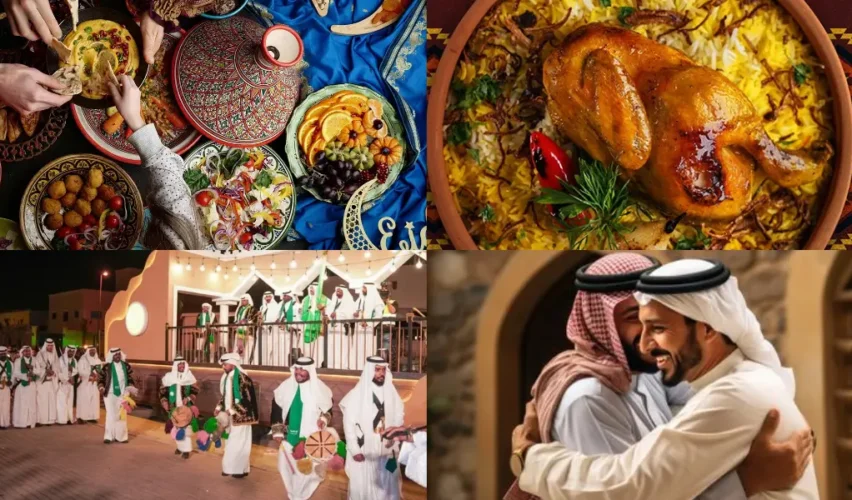
Eid al-Fitr is one of the most festive Islamic occasions in Saudi Arabia. Muslims celebrate the end of Ramadan with loved ones and feasts. Cities are filled with festive markets, dates, and traditional sweets. Children get Eidi from their elders, and everyone wears new clothes. The Eid starts with Eid prayers and the festivities go on for three days. Let’s talk about why, how, and when is Eid Al Fitr celebrated in Saudi Arabia, and everything else you need to know about this occasion.
Key Takeaways!
- Eid-ul-Fitr celebrates the end of Ramadan with gratitude and faith.
- Saudi Eid traditions include Eid prayers, family gatherings, festive foods, new clothes, henna, and Eidiya.
- Zakat al-Fitr ensures the needy can celebrate Eid like everyone else.
- Eid-ul-Fitr is surely a joyful and cultural celebration for people of all ages.
Why is Eid Al-Fitr Celebrated in Saudi Arabia?
Eid Al-Fitr is celebrated to mark the end of the month of Ramadan in Saudi Arabia. Muslims celebrate it to offer gratitude to Allah for the strength throughout the month of fasting. They perform special prayers and give Zakat Al-Fitr to the needy. Saudis celebrate Eid with family, food, and community gatherings across the country.
Key Reasons to Celebrate Eid al-Fitr in Saudi Arabia
- End of Ramadan: Eid marks the end of Ramadan, a month of fasting, prayer, and self-reflection.
- Spiritual Reward: The festival is seen as a blessing from Allah for completing Ramadan. It encourages faith and instills a spirit of liveliness in Muslims.
- Thankfulness: It is a time to be thankful to Allah for the strength and blessings received during Ramadan, through special Eid prayers.
- Community & Togetherness: Eid brings families and communities closer through shared meals, visits, and kind actions.
- Charity (Zakat al-Fitr): Giving Zakat before Eid prayer helps the poor join in the celebrations. The act promotes unity.
How is Eid Al-Fitr Celebrated in Saudi Arabia?
Eid al-Fitr in KSA starts with the morning Eid prayer. The day goes on with family feasts featuring traditional dishes like Kabsa, Mandi, etc. People also exchange gifts and kids get money or Eidiya from elders. There are also public celebrations like fireworks and cultural shows.
Key Ways of Saudi People Celebrating Eid:
- Zakat al-Fitr: Before Eid prayers, Muslims give mandatory charity (Zakat al-Fitr) so everyone can enjoy the festival, usually as food or money.
- Salat al-Eid: Special group prayers take place in mosques like Masjid al-Haram in Makkah or Masjid al-Nabawi in Madina, or in open spaces, with extra Takbirs (“Allahu Akbar”).
- Greetings: People say “Eid Mubarak (عيد مبارك)” which means “Happy Eid.”
- Family Gatherings & Feasts: Families visit each other to share big meals, including Kabsa, Jareesh, and sweets like Maamoul.
- Eidiya (Gifts): Children receive money or presents from adults. It is a beloved tradition.
- New Clothes & Henna: Wearing new clothes, shoes, and applying henna is common especially among women.
- Festivities & Fireworks: Saudi cities hold large celebrations with fireworks, cultural shows, and other means of entertainment.
- Community Spirit: Eid focuses on unity, kindness, and stronger bonds, with generosity highlighted everywhere.
When is Eid Al-Fitr 2026?
Eid Al-Fitr 2026 in Saudi Arabia is expected to fall on March 19, 2026. In Islamic calendar, this will be 1 Shawwal 1447 AH and the end of Ramadan. The actual date will be officially confirmed after the moon sighting close to the end of Ramadan.
Note: Muslims are advised to keep up with the official moon sighting to know when Eid 2026 is.
Eid Traditions in Saudi Arabia
Saudis follow a mix of religious practices and cultural customs for Eid. From preparing homes to sharing meals, the whole vibe of this occasion is quite happening. Let’s walk you through everything Muslims do during Eid:
Preparation for Eid
Families start preparing days before Eid. Homes are cleaned and decorated. People give special attention to creating a warm, festive environment. Women usually put henna on their hands and stock ingredients for Eid special dishes.
Fun Fact!
Preparations for Eid al-Fitr starts around 10 days before.
Shopping for Eid
Eid shopping is an exciting tradition in Saudi Arabia. Markets and malls come alive every night during Ramadan. People head to them to get clothes, home items, etc. for Eid. People buy new outfits, shoes, perfumes, and gifts for their loved ones. Shopping also includes festive items, sweets, and dates.
The Night Before Eid
After Saudis iftar their last fast, they get into the Eid spirit. The night before Eid is also known as Leilet el-Eid. People start preparing for the next-day feasts, bake maamoul and do the last-minute preparations. Some are even so excited that they pull an all-nighter and sleep after the Eid prayer.
Eid Morning & Eid Prayers
When the Eid sun rises, Muslims get ready for Salat al-Eid. They get dressed up in new clothes and turn toward their nearest mosques. Eid prayer is not just submission to Allah, but also a unifying experience. After prayering, Muslims greet each other and exchange conversations. Then they go back to their homes to have the Eid sweet and breakfast.
Did You Know?
Eid prayers are held in mosques or open spaces like Makkah’s Masjid al-Haram and Medina’s Masjid al-Nabawi, etc.
Eid Breakfast
After Eid prayers, families enjoy a festive breakfast together. Traditional foods like dates, laban, and sweet dishes are common. Breakfast is usually a lighter meal. But it brings everyone together in joy and liveliness.
Eid Lunch & Dinner
The next comes lunch and dinner times on Eid day. Both of these are festive meals. Many people like to invite people over for lunch and dinner. They prepare dishes like Kabsa, Mandi, Jareesh, and a variety of sweets including Maamoul and Kunafa. Guests are welcomed warmly. Moreover, sharing food symbolizes hospitality and generosity.
Family Gatherings & Hospitality
Eid is the time for gathering around and catching up with loved ones. Relatives visit each other’s homes and share meals. Get ready to have a lot of great food and sweets. Also, get ready to meet your favorite friends and family. If you are a tourist, having an Eid meal at a Saudi household is highly recommended.
Festivals & Festivities
During Eid-ul-Fitr, the public places also come alive. Amusement parks and picnic spots open. Then there are folk performances too. Traditional Eid songs like “Farha Farha” by Ali Abdulkarim play in the markets and parks. Many cities also have firework shows.
Tip!
Don’t waste the whole Eid occasion being a sleepy hat.
The Tradition of Eidiya
This tradition is for children. Elders give Eidiya to the younger ones. This is given in the form of money or sometimes gifts. Eidiya is a symbol of love and blessings. Children eagerly wait for their gifts. After all, it is one of the most exciting parts of the festival.
Is Eid a Muslim Only Celebration?
Eid Al-Fitr is a Muslim celebration. However, non-Muslims can also join in respectfully. They can share Eid Al-Fitr greetings (تهنئة عيد الفطر), enjoy food, and participate in community events. The festival is actually about generosity and togetherness. And anyone can appreciate it, whether Muslim or non-Muslim.
Tourists are highly encouraged to experience Eid festivities in Saudi Arabia. This way, they’ll get to immerse in the cultural traditions, values, and good food. I mean, who would want to miss an Eid special feast?
Can tourists celebrate Eid in Saudi Arabia?
Eid al-Fitr can be a great experience for tourists in Saudi Arabia. They can indulge in shopping, enjoy traditional cuisine, attend cultural shows, and activities. Eid festivities also support the Saudi Vision 2030 goals by attracting tourists.
How Visitors can Experience Eid Al-Fitr in Saudi Arabia?
Saudi Arabia is always crowded with travelers. Many expats also live here. For them, experiencing Eid-ul-Fitr in Saudi Arabia can be a memorable experience. Some of the best ways for expats and tourists in Saudi Arabia to enjoy Eid are:
- Go to malls or traditional souqs to be a part of the vibrant Eid shopping scene
- Offer Eid prayer at a grand mosque to experience unity and spirituality
- Savor regional and traditional Eid dishes, including the sweets
- Attend Eid events and festivities in cities like Riyadh if you can
What are the Most Favorite Eid Foods in Saudi Arabia?
Some of the most favorite Eid foods in Saudi Arabia include Kabsa, Jareesh, and Mandi. These dishes are made with rice and meat. Dates are always essential. Sweets like Maamoul, Kunafa, and Basbousa are also quite popular.
Savory Dishes
Mugalgal: A popular Saudi dish made with chopped lamb or chicken fried with onions, peppers, and tomatoes.
Jareesh (Harees): A wheat porridge made of ground wheat with meat (lamb/chicken). Seasoned with spices like turmeric, cumin, and black pepper.
Saleeg: Popular in Hijaz, this creamy rice dish is made in milk and broth. They are paired with roasted chicken and chili sauce (duggus).
Matazeez: Wholesome stew featuring lamb, vegetables (eggplant, zucchini, green beans), and dumplings. Traditional Najdi dish.
Kanad: Shallow fried king mackerel. Kanad is quite famous in coastal areas.
Sweet Dishes
- Ma’amoul: Soft shortbread cookies filled with dates, pistachios, or walnuts, representing generosity and welcome.
- Shereyya (Sevia): Sweet vermicelli noodles cooked in milk with saffron and cardamom, sometimes mixed with dates.
- Debyazah: A rich blend of fresh nuts like almonds, pistachios, pine nuts, and dried fruits such as figs, apricots, and dates.
- Masabib: Traditional Najdi pancakes topped with ghee and honey.
- Aseeda: A simple, soft dessert made from wheat flour cooked with honey, served in different regions.
- Ghuraibah: Soft, buttery biscuits that melt easily in the mouth.
- Tamriya: Fried sweets filled with date paste and covered in powdered sugar.
Regional Breakfasts
- Jazan Province: Includes Al-Marsa, a mix of flour, bananas, honey, and ghee. Usually served with salty fish.
- Eastern Province: Celebrates Eid Sufra with foods like Balaleet (vermicelli with eggs), porridge, and Al-Fatit (flour, ghee, dates).
Eid Festivities are surely incomplete without food. While regular dishes are okay, setting traditional feasts elevates Eid vibes quite vibrantly. Plan smartly to decide which dishes would go on your menu. Make sure to choose the ones that would take lesser efforts and are more delicious.
Eid Feast Tip!
Start preparing for the food items one or two days before the Eid lunch or dinner. This will save you from last minute mishaps and delays.
How long are the Eid holidays 2026 in Saudi Arabia?
Saudi Arabia is expected to observe 2026 Eid Al-Fitr holidays for about 3–4 days after the month of Ramadan ends. The exact dates depend on official announcements after moon sightings. Public and private sectors usually give several days off for celebrations.
What is the most popular Saudi sweet dish for Eid?
One of the most popular Saudi sweet dishes for Eid is Maamoul. These are shortbread cookies filled with dates, pistachios, or walnuts. Other favorites include Kunafa and Basbousa. Both are widely enjoyed during festive gatherings and family meals across the Kingdom.
What is Zakat ul Fitr?
Zakat ul-Fitr is a required form of charity given by Muslims at the end of Ramadan before Eid prayers. It traditionally consists of staple food items or their money equivalent. Zakat ul-Fitr is meant to help those in need celebrate Eid.
Why is Zakat ul Fitr important?
Zakat ul-Fitr ensures that even the poorest in society can participate in the joy of Eid. It purifies the fasting person’s fast and supports the needy. Broadly, it promotes social unity and compassion during Eid.
Conclusion
Eid Al Fitr is a time of joy and togetherness in Saudi Arabia. It marks the reward of patience and devotion. Muslims offer prayers and families gather for a good time together. Traditions, food, and hospitality make Eid even more a special occasion. From Eid prayers to festive meals, every moment has meaning. The celebration of Eid-ul-Fitr reflects kindness and gratitude. It offers a chance to experience Saudi culture in a festive way, to both locals and tourists.