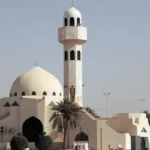
Know the accurate timing for all five prayers in Madinah. The above schedule is designed to help you stay updated with all salah timings for the day.
This clock is helpful for locals and tourists in Madinah for keeping up with daily salah timing. The five prayers give us the opportunity to return to Allah no matter how busy the day gets. When muezzin calls with adhan, Muslims go to their nearby mosques in Madinah to offer prayer. Pro tip: bookmark this page so you can easily check for the next prayer time. Another perk of keeping up with daily Islamic prayers makes planning work and family time more efficient.
Note: All prayer timings can differ by a few minutes on a daily basis. This is because of the changing positions of the sun. Therefore, you should check the schedule everyday.
This prayer schedule is helpful for the Hanbali, Maliki, Shafi sects, and the Hanafi sect. Have a look for the correct time you follow!
Your Short Guide to Islamic Prayers
Prayers or Salah hold great importance in Islam. Muslims perform them five times a day to connect with Allah. Each prayer brings spiritual peace, discipline, and mindfulness. Prayer is the second pillar of Islam and is emphasized in the Quran several times.
All the Five Pillars of Islam
The Five Pillars of Islam are the foundation of a Muslim’s faith and practice. They define the beliefs, duties, and moral values. These include:
The Five Daily Prayers and Rakats
Each day, Muslims offer Fajr, Duhr, Asr, Maghrib, and Isha at prescribed times. Every prayer consists of a specific number of rakats. You should know that these rakats refer to a combination of recitation, movement, and reflection.
| Prayer | Time |
| Fajr | Before sunrise |
| Dhuhr | Midday |
| Asr | Afternoon |
| Maghrib | After sunset |
| Isha | Night |
Adhan
The public call to prayer is called adhan. It is a melodious announcement that invites Muslims to their nearby mosque to offer salah. Muazzin delivers adhan facing Qiblah whenever it’s time for prayer. This call to salah is commonly heard in Muslim countries, including Saudi Arabia.
What is the importance of Adhan?
The adhan serves as a reminder of faith, community, and punctuality. After all, it unites Muslims for collective worship at a specific time of the day. It is also physical meditation. It is also a form of physical meditation, as Muslims stand, bow, and prostrate during it. Hence, salah aligns both their bodies and souls in devotion to Allah.
All the verses of Adhan |
| Allahu Akbar (God is Great)Ashhadu an la ilaha illallah (I bear witness there is no god but Allah)Ashhadu anna Muhammadar Rasul Allah (I bear witness that Muhammad is the messenger of Allah)Hayya ‘ala-s-Salah (Come to prayer) Hayya ‘ala-l-Falah (Come to success) Assalatu khayrun min an-naum (Prayer is better than sleep – Fajr only) Allahu Akbar (God is Great) La ilaha illallah (There is no god but Allah) |
Wudhu or Ablution
Before offering Salah, Muslims perform Wudu. It is a ritual of cleaning to purify the body for prayer. It involves washing the hands, mouth, nose, face, arms, head, and feet in a specific sequence. And it is mandatory before all prayers.
Why is Performing Wudhu Important?
Doing wudhu before salah cleans the body and prepares the mind. With several steps, it gets the soul ready to connect with Allah. All in all, it ensures you stand before God in a state of cleanliness and humility. Wudhu also symbolizes discipline, mindfulness, and respect in Islamic worship.
Additional Prayers Other than Daily Salah
In addition to the five daily prayers, Muslims offer other prayers too. All of these have their own significance and come with blessings. Most of these aren’t required to be offered daily, but are a great way of growth, forgiveness, and earning extra rewards.
Jummah Prayer
It is a special prayer held every Friday around the time of Duhr. Jummah prayer includes a khutbah right after salah. It unites Muslims weekly for reflection, worship, and learning.
Tahajjud Prayer
Tahajjud is a late-night prayer performed before Fajr. It’s not an obligation. But it does give a time for spiritual meditation, seeking forgiveness, peace, and closeness to Allah.
Taraweeh Prayer
During Ramadan, people offer special nightly prayers after Isha. These are called Taraweeh. It usually consists of 8 to 20 rakats, performed in sets of two. Muslims recite long portions of the Quran in Taraweeh.
Eid Prayers
Muslims also offer prayers on Eid al-Fitr and Eid al-Adha mornings. These special group prayers are a way to show gratitude and be together in joy after fasting and sacrificing.
Benefits of Salah’s Physical Postures
Islamic Prayers are a complete act of worship that benefits both the soul and the body. Every posture you take during salah carries spiritual meaning and physical value. These movements promote focus, relaxation, and better health. And now, science also backs their benefits.
- Qiyam (Standing): Improves posture and blood flow.
- Ruku (Bowing): Strengthens the spine and increases flexibility.
- Sajdah (Prostration): Enhances blood circulation to the brain, promoting calmness.
- Tashahhud (Sitting): Improves digestion, strengthens legs, and supports spinal alignment.
Islamic prayers have holistic effects. They nurture body, mind, and soul. They also act as a reminder to return to Allah amid worldly obligations.